The Architecture of Rice: Mastering the Traditional Palestinian Maqluba Recipe with Perfect Layering.
The Intro
The biggest mistake that ruins the Traditional Palestinian Maqluba Recipe happens long before the pot reaches the stove; it is overcrowding the pot with wet vegetables. Rushing the frying process or failing to drain the moisture from your eggplants will result in a soggy, structural collapse when you attempt the final flip.
Consequently, we treat this dish as a vertical engineering project where each ingredient acts as a precise moisture barrier. At “Azouma,” we understand that the magic of Maqluba relies on starch retrogradation and the physics of gravity working together inside a heavy-bottomed pot.
This dish represents a delicate equilibrium between fat extraction and starch absorption. As a result, the rice grains must swell perfectly using the vegetable juices without turning into a mushy paste. On the other hand, the bottom layer of protein must be caramelized beautifully to serve as a sturdy, visual crown once inverted.
Preparation Info
- Recipe Name: Traditional Palestinian Maqluba (Eggplant and Cauliflower).
- Servings: 6-8 Persons.
- Prep Time: 45 Minutes (including vegetable sweating).
- Cook Time: 50-60 Minutes.
- Main Ingredient: Chicken (or Lamb), Medium-grain Rice, and Eggplants.
- Difficulty Level: Advanced (Requires precision flipping).
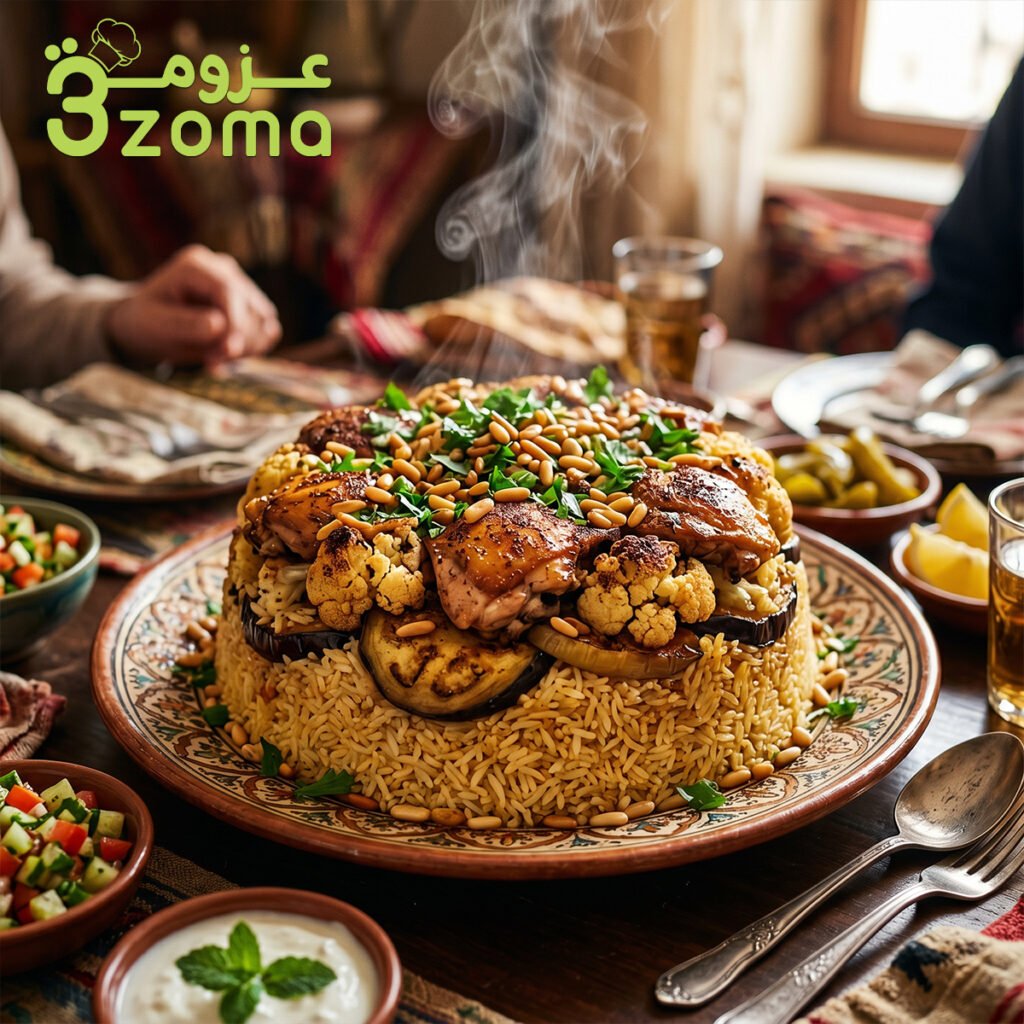
[Traditional Palestinian Maqluba Recipe] Ingredients in Grams
For a perfectly stable mold that keeps its shape on the platter, use these exact digital measurements:
- 1200g Whole Chicken (Cut into 4 or 6 pieces).
- 700g Premium Medium-grain Rice (Egyptian or Calrose).
- 600g Globe Eggplants (Sliced into 2cm thick strips).
- 400g Cauliflower Florets.
- 150g Onions (Sliced into thick rounds for the base).
- 50ml Vegetable Oil (For frying and searing).
- 15g Salt (Divided between the broth and vegetables).
- 8g Maqluba Spice Blend (Allspice, Cinnamon, Cardamom, Turmeric, Nutmeg).
Detailed Steps to Make Traditional Palestinian Maqluba
- Vegetable Desiccation: Generously salt the eggplant slices and let them sit for 30 minutes to sweat out bitter compounds and excess water. Wipe them completely dry before frying; this prevents them from absorbing excess oil and breaking apart later.
- The Golden Sear: Deep-fry or brush with oil and bake the eggplants and cauliflower until they reach a deep caramel color. Simultaneously, sear the chicken pieces in a separate pan to develop a rich, savory crust that will hold its shape at the base of the pot.
- The Spiced Broth: Simmer the seared chicken with onions, a cinnamon stick, and half of the Maqluba spice blend until cooked through. Strain the broth and set it aside; this liquid gold will carry the foundational flavors into the rice.
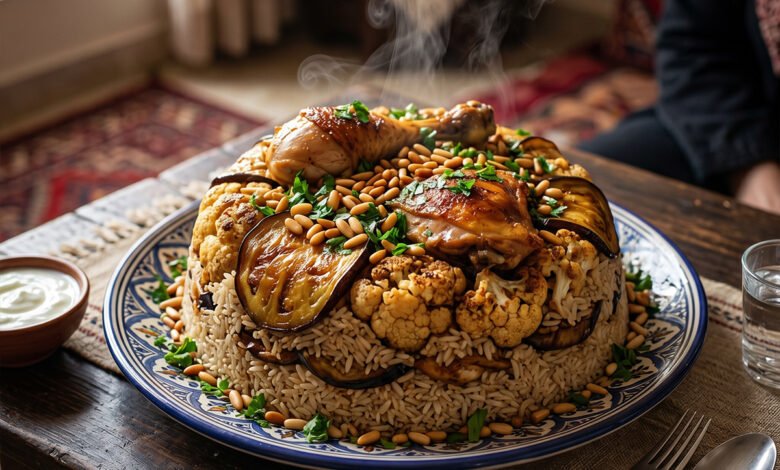
- Structural Layering: Line the bottom of a non-stick pot with tomato or onion slices to prevent sticking. Press the chicken pieces firmly on top, then arrange the fried eggplants vertically along the sides of the pot, filling the center with cauliflower florets.
- The Hydraulic Pour: Pack the washed and spiced rice tightly over the vegetables, then gently pour the hot broth over the back of a spoon to avoid disrupting the layers. The liquid must sit exactly 1.5cm above the rice level for optimal steaming.
The Rescue Section: How to Save the Recipe?
If you lift the pot and the Traditional Palestinian Maqluba Recipe begins to slump or spread across the platter, do not panic. Quickly slide a large, deep bowl upside down over the pile to push the edges back together, molding it into a tight dome shape for 3 minutes before lifting.
If the top layer of rice remains chalky and dry while the broth has fully evaporated, do not stir the pot. Instead, dampen a clean kitchen towel with boiling water, drape it directly over the rice surface, seal the lid tightly, and let it steam on ultra-low heat for an extra 10 minutes.
Plating, Garnishing & Internal Linking
The presentation is a theatrical performance; invert the pot onto a large flat tray and leave it untouched for 10 minutes to let gravity stabilize the structure before lifting. Garnish the top with toasted pine nuts and a scattering of fresh parsley.
Azouma Tip: The intense caramelization of the fried vegetables pairs magnificently with our [Traditional Arabic Tomato and Cucumber Salad] or a bowl of [Thick Mint Yogurt] to introduce a bright, refreshing acidity.
Chef’s Confessions & Trade Secrets
- Chef’s Confessions: Just between us, in my early days at “Azouma,” I used to use long-grain Basmati rice for everything. I quickly learned that Maqluba completely loses its structural integrity with long grains; you absolutely need the high-amylopectin starch of medium-grain rice to act as the “glue” that keeps the mold intact.
- Trade Secret (The Inversion Rest): The absolute secret to a flawless flip is the “Thermal Rest.” When you turn the heat off, keep the lid sealed for 15 minutes before flipping, and once flipped onto the tray, leave the pot upside down for another 10 minutes. This allows the internal steam to redistribute, naturally releasing the caramelized meat from the bottom without tearing.
Conclusion (Azouma’s Challenge)
Executing a flawless Traditional Palestinian Maqluba Recipe elevates you from a home cook to a master of Levantine culinary arts. It is a stunning display of heat distribution, moisture containment, and timing.
Azouma’s Challenge: Next time, try adding a thin layer of fried potato rounds at the very bottom of the pot beneath the chicken. Let us know if they achieved that ultimate, deeply crispy chip texture!
read more about
The Science of Jameed: A Professional Guide to the Traditional Jordanian Mansaf Recipe.
Beyond the Oven: The Chicken and Potato Tray Recipe for “Aged” Marinades and Perfect Doneness