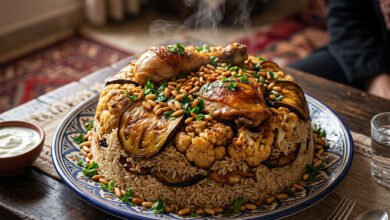
The Science of Jameed: A Professional Guide to the Traditional Jordanian Mansaf Recipe.
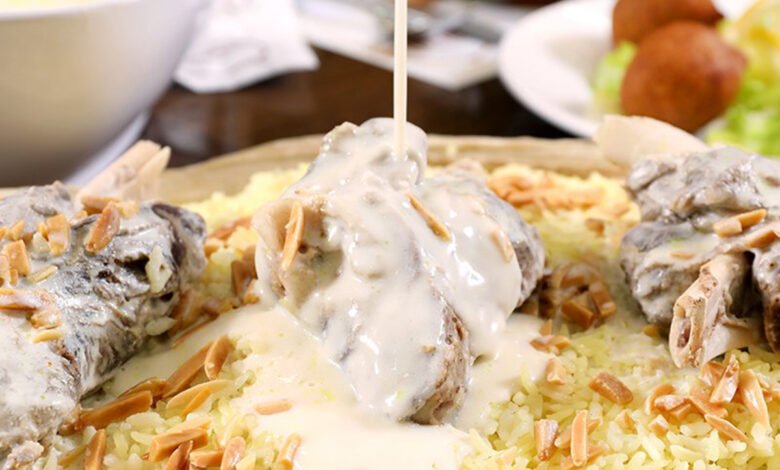

The Science of Jameed: A Professional Guide to the Traditional Jordanian Mansaf Recipe.
Ingredients
Method
- Jameed Liquefaction: Soak the crushed Jameed stones in warm water for at least 4 hours. Use a high-speed blender to emulsify the mixture until it reaches a smooth, heavy cream consistency; filtering it through a fine-mesh sieve is mandatory to remove any granules.
- The Initial Poach: Sear the lamb chunks in a small amount of ghee to initiate the Maillard reaction. Submerge in water and boil for 15 minutes, removing all surface "scum" (foam) to ensure the final broth remains pure and bright.
- Yogurt Incorporation: Replace the water with the liquefied Jameed broth. The key at "3zoma" is to stir the pot in one direction continuously until it reaches a boil; this kinetic energy prevents the fermented proteins from separating.
- Rice Engineering: In a separate pot, sauté the rice with ghee and turmeric. Add boiling water until it sits 1.5cm above the rice; the goal is a vibrant yellow color and individual grains that do not stick.
- Assembly Protocol: Place a layer of shrak bread on a large platter and drench it with two ladles of the boiling Jameed broth. Top with a mountain of rice, followed by the slow-cooked lamb chunks.
Notes
The Intro
If you believe that the secret to the Traditional Jordanian Mansaf Recipe is the lamb, you are only half-correct. The true protagonist is the “Jameed”—a dehydrated, fermented goat milk stone that requires a sophisticated emulsification process to prevent it from curdling under high heat.
Consequently, failing to manage the “Yogurt Stability” will result in a grainy, separated sauce that ruins the visual and textural elegance of the dish. At “3zoma,” we treat the Jameed broth as a complex emulsion that must achieve a velvety, ivory consistency through constant kinetic motion.
This dish represents the pinnacle of “Layered Hydration.” As a result, the shrak bread must absorb the broth without becoming mushy, while the rice remains firm and aromatic. On the other hand, the lamb is slow-cooked in the yogurt itself, allowing the lactic acid to tenderize the muscle fibers into a melt-in-your-mouth state.
Preparation Info
- Recipe Name: Traditional Jordanian Mansaf (The Royal Feast).
- Servings: 8 Persons.
- Prep Time: 45 Minutes (including Jameed soaking).
- Cook Time: 120-150 Minutes.
- Main Ingredient: Jameed (Goat Yogurt) and Local Lamb.
- Difficulty Level: Professional.
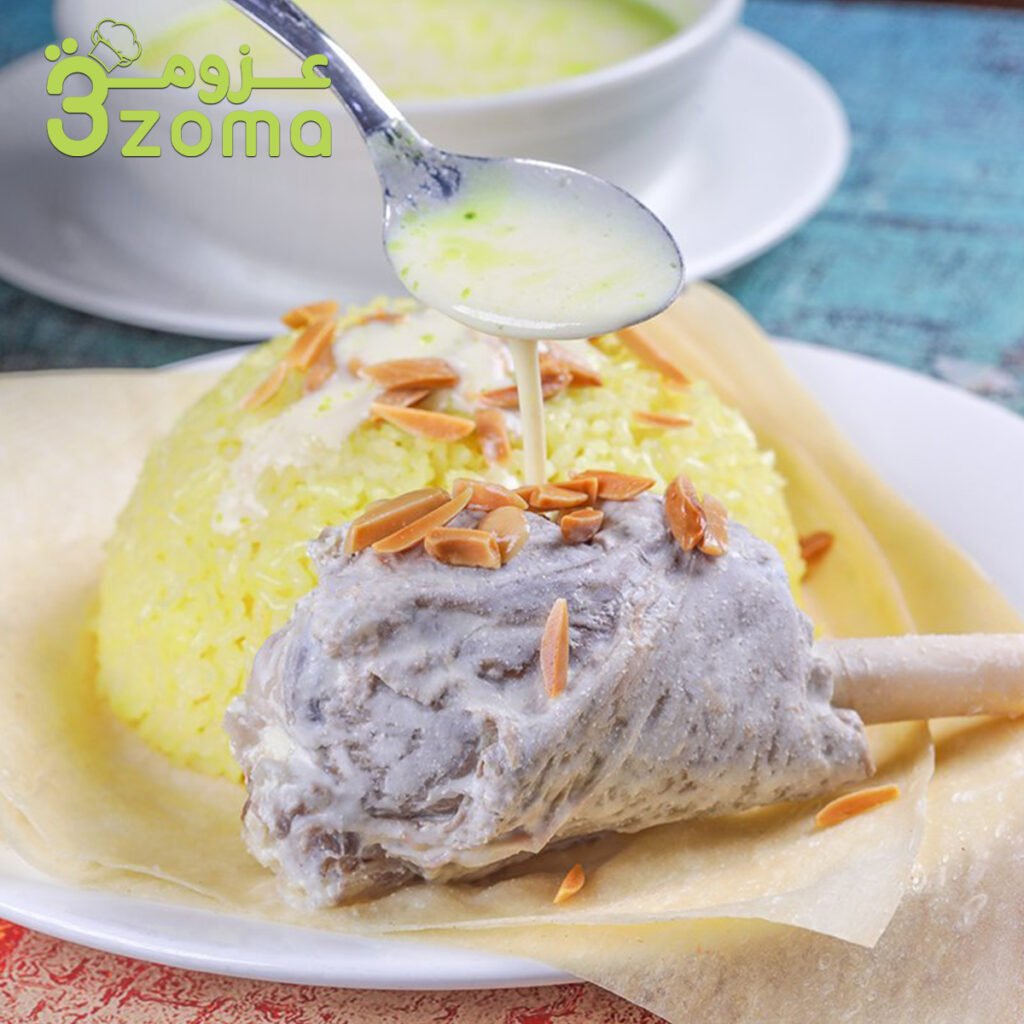
[Traditional Jordanian Mansaf Recipe] Ingredients in Grams
For the most authentic and repeatable results, please use a digital scale:
- 3000g Lamb (Bone-in chunks, preferably shoulder or neck).
- 1000g Long-grain or Medium-grain Rice (Soaked for 30 minutes).
- 500g Jameed (Stone form or high-quality liquid concentrate).
- 100g Ghee (Original Baladi Samin).
- 20g Turmeric (For the rice color).
- 10g Mansaf Spices (Hwajet Al-Mansaf: a mix of mahlab, caraway, and ginger).
- 150g Shrak Bread (Markook).
- 100g Toasted Pine Nuts and Almonds for garnish.
Detailed Steps to Make Traditional Jordanian Mansaf
- Jameed Liquefaction: Soak the crushed Jameed stones in warm water for at least 4 hours. Use a high-speed blender to emulsify the mixture until it reaches a smooth, heavy cream consistency; filtering it through a fine-mesh sieve is mandatory to remove any granules.
- The Initial Poach: Sear the lamb chunks in a small amount of ghee to initiate the Maillard reaction. Submerge in water and boil for 15 minutes, removing all surface “scum” (foam) to ensure the final broth remains pure and bright.
- Yogurt Incorporation: Replace the water with the liquefied Jameed broth. The key at “3zoma” is to stir the pot in one direction continuously until it reaches a boil; this kinetic energy prevents the fermented proteins from separating.
- Rice Engineering: In a separate pot, sauté the rice with ghee and turmeric. Add boiling water until it sits 1.5cm above the rice; the goal is a vibrant yellow color and individual grains that do not stick.
- Assembly Protocol: Place a layer of shrak bread on a large platter and drench it with two ladles of the boiling Jameed broth. Top with a mountain of rice, followed by the slow-cooked lamb chunks.
The Rescue Section: How to Save the Recipe?
If the Jameed broth “breaks” (separates into clumps), do not panic. Whisk 20g of cornstarch with cold water and slowly incorporate it into the boiling broth while whisking vigorously; the starch acts as a stabilizer to re-bind the proteins.
If the lamb is tender but the broth tastes overly salty, add a peeled, halved potato to the simmering yogurt for 15 minutes. The potato acts as a “sodium sponge,” absorbing excess salt without altering the complex flavor profile of the Traditional Jordanian Mansaf Recipe.
Plating, Garnishing & Internal Linking
Garnish the meat with a heavy sprinkling of toasted almonds and fresh parsley. Pour a final ladle of the concentrated “Samin” (ghee) over the meat for an unmistakable aromatic finish.
3zoma Tip: This legendary feast is traditionally eaten with the hands, but regardless of the method, it pairs perfectly with our [Authentic Arabic Coffee] or a side of [Fresh Green Onions and Radishes] to cut through the richness.
Chef’s Confessions & Trade Secrets
- Chef’s Confessions: Just between us, in my early attempts at “3zoma,” I used regular yogurt instead of Jameed. The result was a weak imitation; the deep, pungent, and sour soul of the Traditional Jordanian Mansaf Recipe can only be achieved through the aged fermentation of real goat Jameed.
- Trade Secret (The Samin Infusion): At the very end of the yogurt cooking, fry a small amount of “Mansaf Spices” in a tablespoon of ghee and “quench” it into the boiling yogurt. This creates a sudden aromatic explosion that infuses the meat with a floral, earthy scent that is the hallmark of professional Jordanian chefs.
Conclusion (3zoma Challenge)
Mastering the Traditional Jordanian Mansaf Recipe is a rite of passage for any serious chef. You are now managing a complex biological product (fermented yogurt) and turning it into a culinary masterpiece.
3zoma Challenge: Next time, try adding a few cardamom pods to the rice while it steams. See if you can notice the subtle lift it gives to the heavy, savory notes of the Jameed. We can’t wait to see your “Mansaf Mountain”!
read more about
Beyond the Oven: The Chicken and Potato Tray Recipe for “Aged” Marinades and Perfect Doneness